
How Bench Warrants Work in Mecklenburg County
A bench warrant is court process tied to an existing case or a missed duty. In Mecklenburg, a missed General District Court date may lead to failure-to-appear process, while other court orders can bring a capias or show-cause entry. The exact term depends on the case and the issuing court.
Family, support, and juvenile matters can sit in J&DR, and felony files after indictment belong with Circuit Court. Do not assume every missed hearing follows one rule. Call the clerk for the court that set the obligation.
Mecklenburg County Bench Warrant Missed Dates
For adult traffic or misdemeanor matters, Mecklenburg General District Court is the first records contact. The system can be searched by name, case number, or hearing date. A missed court date does not itself tell you which process the judge entered or what action will clear it.
Use the case number from the summons and call the clerk. Ask whether the file shows a failure to appear, a new hearing date, a capias, or a show-cause requirement. The clerk can explain procedure, but not advise whether you should file a motion or surrender.
The Mecklenburg GDC case search is the online starting point for local adult cases.
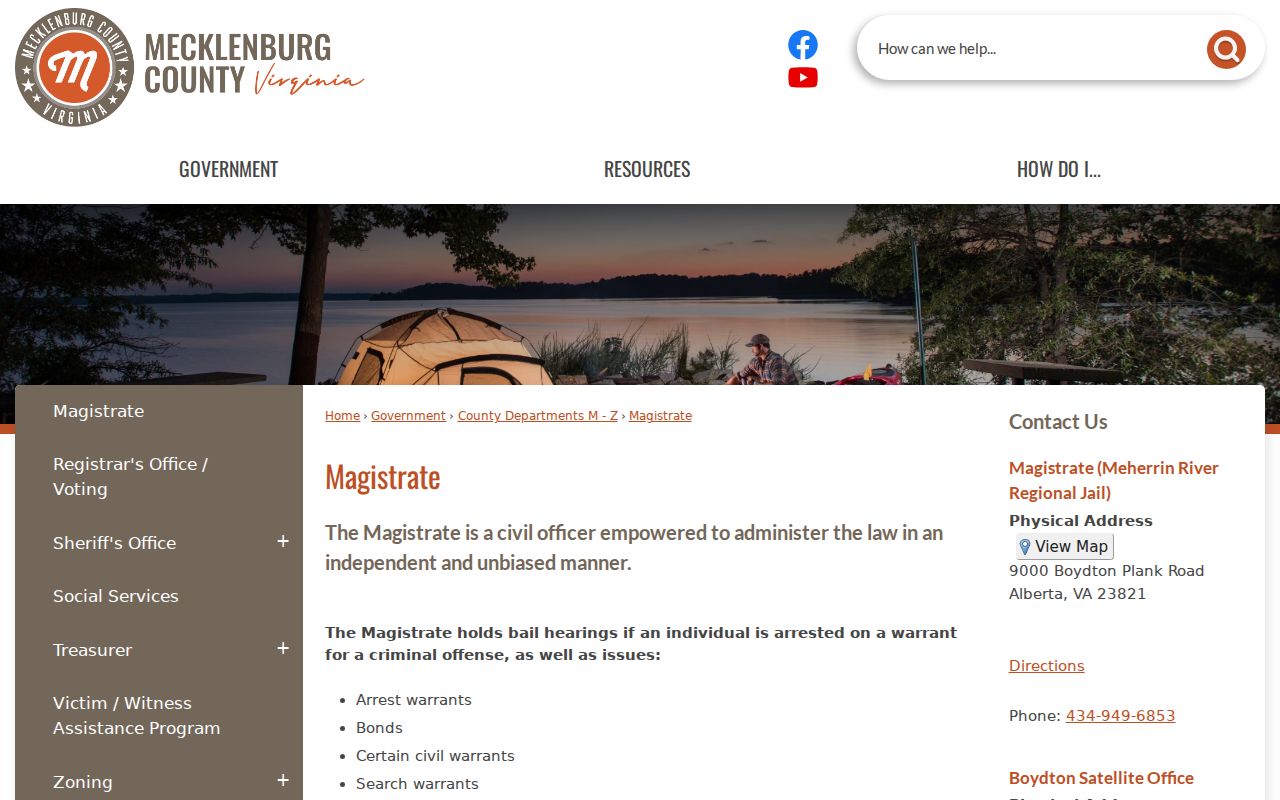
The magistrate page lists separate issuance and bail contacts; it is not a public name-search tool.
Bench Warrant Issuance in Mecklenburg County
A judge may enter process after a person misses a required appearance or fails to follow a court order. Virginia law also describes a sworn complaint and probable-cause finding for an arrest warrant. These are different paths: the court record and the type of process explain what happened.
Virginia has no public statewide warrant roster. A case may appear in OCIS or GDC information, but those systems do not promise a complete warrant view. The issuing court controls whether process is recalled and what a person must do next.
Mecklenburg County Capias and Show Cause Codes
The January 2025 GDC statistical report uses `CA` for capias and `SC` for show cause. Those are aggregate filing categories, not an active-warrant counter. They cannot tell a reader whether a particular case has a warrant or whether a court has withdrawn it.
Virginia uses capias terminology in criminal process. “Show cause” means the court directs a person to explain why a required act was not done. Ask the clerk to read the individual case entry and name the exact process.
How Bench and Arrest Warrants Differ
A bench warrant follows a court obligation, often a missed date. An arrest warrant follows a sworn complaint and probable-cause decision. The clerk can identify the entry in the case; a magistrate or judge may be involved in issuance. Mecklenburg sheriff and town officers may serve process.
For the separate probable-cause route, see the arrest warrant information.
| Feature | Bench Warrant | Arrest Warrant |
|---|---|---|
| Trigger | Missed court obligation or required act | Sworn complaint and probable-cause finding |
| Record route | Clerk for the existing case | Issuing court or magistrate |
| Purpose | Bring the person back before the court | Authorize arrest on a new allegation |
| Next step | Ask the court about a date or motion | Confirm process and speak with counsel |
Mecklenburg County Bench Warrant Court Roles
GDC handles adult traffic and misdemeanor records, preliminary felony hearings, and town dockets. J&DR handles juvenile and family jurisdiction, support, and related matters. Circuit Court keeps felony files after indictment and other circuit criminal records. Each clerk can confirm only the file held by that court.
A town's name on a docket does not create a town municipal court. Mecklenburg's five incorporated places route adult traffic and misdemeanor case status through the central GDC. The judge or court that set the underlying obligation controls a recall or new date.
The county magistrate page lists warrant and bail functions.
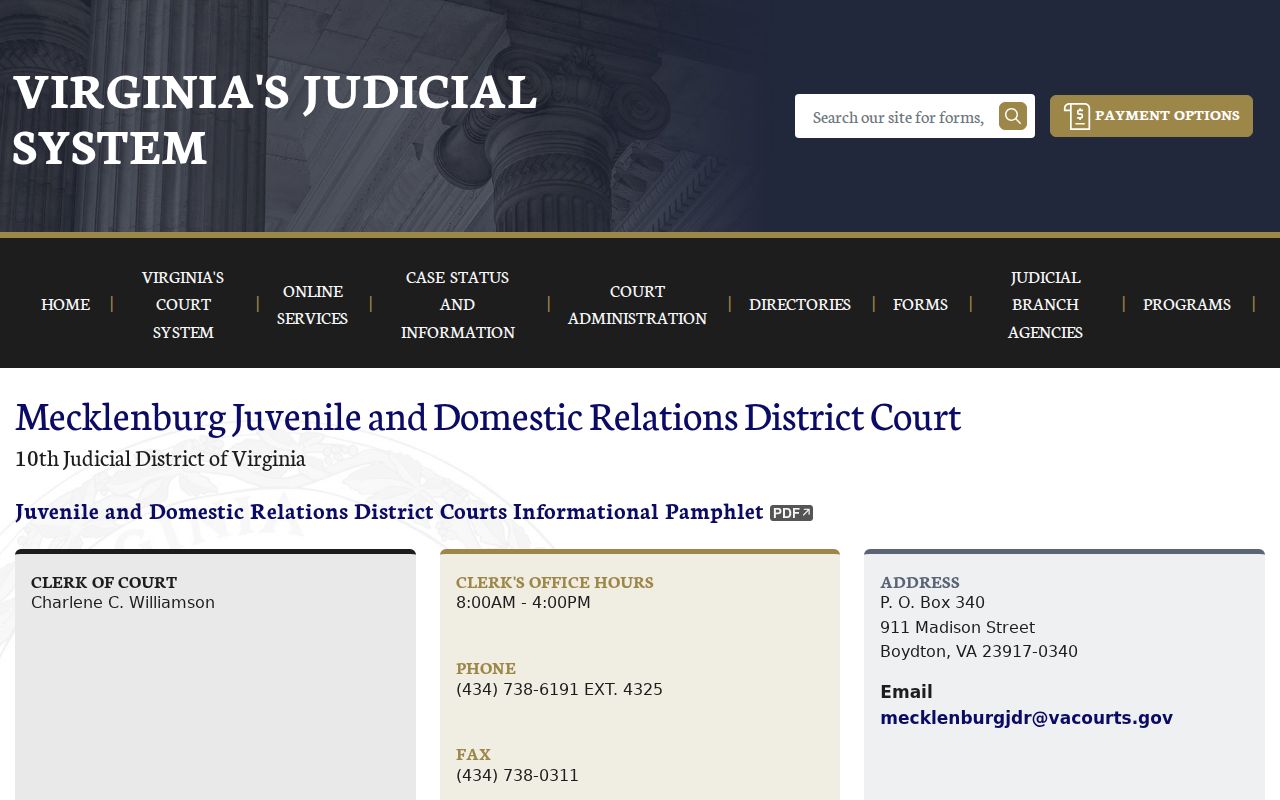
J&DR case details have additional privacy limits that may not apply to an adult GDC search.
Clearing a Bench Warrant in Mecklenburg County
Start by identifying the issuing court and confirming the exact process. Ask whether the court expects a new date, a motion to recall or quash, an appearance, or another step. A lawyer can help plan how to address it. The county does not publish a universal walk-in recall window or a bond schedule.
- Search the court case by name or number and write down the court, charge, and next date.
- Call that court's clerk to ask what process appears and which action is accepted.
- Speak with a Virginia attorney about a motion, appearance, or voluntary surrender.
- Follow the court's instructions for the underlying case and keep written confirmation.
Caution: Do not assume an old missed date has disappeared; call the issuing clerk before traveling or relying on an online result.
Mecklenburg County Bench Warrant Bond Details
Virginia law allows release conditions and bond decisions, but Mecklenburg's official sources do not publish a local bond amount, payment method, refund rule, or walk-in bond window. The magistrate page lists bail-hearing functions and locations, but does not give a public schedule.
Ask the clerk whether the question belongs with a magistrate, then confirm the case and payment instructions through an official phone number. A caller's claim or a generic online case result is not enough to establish the amount due.
Mecklenburg County JDR Bench Warrant Access
Juvenile and Domestic Relations cases can involve juvenile, family, or support records with access limits that do not apply to every adult General District Court case. A public name search may return a shortened entry or no visible details. That result does not answer whether a court order exists in a restricted file.
The Mecklenburg J&DR clerk page gives the local court route. Call (434) 738-6191, extension 4325, with the case number and ask what information may be provided or which contact handles the next step. Do not seek restricted details about another person through a public search.
Mecklenburg County Courts That Issue Bench Warrants
Read the court name on the summons or result. GDC is the route for adult traffic and misdemeanor matters; Circuit handles felony files after indictment; J&DR owns family, juvenile, support, and related cases. The sheriff serves process, but the issuing court controls the underlying case and its recall.
Use the county warrant-check steps to find a public case entry, then call the clerk. For juvenile matters, limited public results may reflect confidentiality rules rather than the absence of a case.